Source Electronic Interactive Cat Toy for Play, Training, and Exercise
Compare 30 electronic interactive cat toy options from verified suppliers. Buyers can evaluate features like electric power, certifications, and packaging to find suitable products for pet play and training needs.
Key considerations
Products List




Comprehensive Sourcing Guide
Strategic Sourcing Guide for Electronic Interactive Cat Toys
Understanding Product Definitions and Core Attributes
When initiating a procurement strategy for electronic interactive cat toys, buyers must first distinguish between products that rely on active power sources and those that function mechanically or manually. The market landscape for this category is defined by a clear divergence in operational mechanics. High-confidence data indicates that specific product listings in this sector are explicitly categorized as "Electric," suggesting the presence of motors, sensors, or battery-operated components designed to simulate prey movement. Conversely, other entries within the same search parameters are marked as "Not Electric," indicating a reliance on manual interaction or passive mechanical designs. This distinction is critical for buyers because it dictates the supply chain requirements, including the need for battery compliance, electrical safety testing, and specific packaging for lithium-ion or alkaline cells.
The material composition of these toys is predominantly plastic, a choice driven by durability, cost-efficiency, and the ability to mold complex shapes that mimic small animals or insects. This material choice supports the "Type" attribute observed in product data, which explicitly identifies items as "Cat Toy" or "Dog Toy," confirming the intended end-user. However, the specific application for feline interaction requires a focus on safety and engagement. The "Type" attribute also appears alongside specific model identifiers such as "D0053" and "D0069," which are associated with distinct color profiles like Green, Pink, Blue, and Orange. These color variations are not merely aesthetic; they serve as visual cues for pet engagement, with certain hues potentially triggering different behavioral responses in cats.
Technical Specifications and Customization Parameters
Technical specifications for electronic interactive cat toys vary significantly based on the manufacturer's design philosophy and the target market's regulatory environment. A primary observation in the current supply base is the availability of customization. While some listings state "Non-Customized," others explicitly note that "Customization: Available" or "Customized" options exist. This flexibility allows buyers to tailor product dimensions, colors, and functional features to align with their brand identity or specific market demands. For instance, the attribute "Color: Can Be Customized" suggests that buyers can request specific Pantone matches or unique color combinations beyond the standard Pink, Yellow, Blue, or Orange options observed in generic listings.
Size and weight are equally critical technical parameters. The data reveals a wide range of dimensions, with some products specified as "730cm" or "1342cm," while others provide standard measurements like "19567mm" or "80300mm." The weight specifications further illustrate this diversity, with unit weights ranging from "81G" to "140g" and even "100g." These variations impact the shipping cost, the perceived value of the product, and the suitability for different cat sizes. Smaller, lighter toys (e.g., 81g) may be designed for solo play or smaller breeds, whereas heavier units (e.g., 140g) might incorporate larger battery packs or more complex mechanical structures.
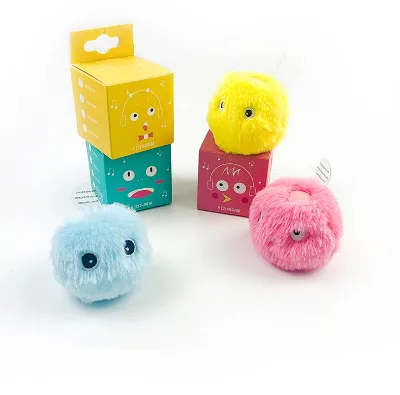
Packaging standards also play a vital role in the technical specification of the final product. Buyers must navigate between "1PC/Color Box," "Standard Export Carton," "Color Box," "Carton," "Box," and "OPP" (Oriented Polypropylene) bagging. The choice of packaging affects the retail presentation and the protection of the electronic components during transit. For example, a "Color Box" is typically required for retail-ready items to maximize shelf appeal, while "Standard Export Carton" or "Carton" packaging is essential for bulk shipping and warehouse storage. The "Input Carton" attribute, noted as "48PCS" in some contexts, provides a clear indication of the optimal packing quantity for logistics efficiency.
Compliance, Certification, and Regulatory Standards
Navigating the regulatory landscape is a non-negotiable aspect of sourcing electronic interactive cat toys. The presence of "Electric" attributes necessitates rigorous adherence to electrical safety standards. The observed data highlights several key certifications that serve as indicators of compliance. "CE" (Conformité Européenne) is a frequently cited certification, appearing in multiple product listings. This certification is mandatory for products entering the European Economic Area, ensuring that the electronic components meet health, safety, and environmental protection requirements.
Beyond CE, the supply base also references "CCC" (China Compulsory Certification) and "ISO" (International Organization for Standardization) standards. The combination of "CCC, ISO, CE" suggests a supplier capable of meeting both domestic Chinese requirements and international benchmarks. Additionally, "RoHS" (Restriction of Hazardous Substances) is mentioned, which is crucial for electronic products to ensure that materials like lead, mercury, and cadmium are not used in harmful quantities. While "ROHS" appears in low-confidence background data, its association with "CE, RoHS" in high-confidence listings reinforces its importance for electronic toys.
Buyers must verify that the specific model numbers, such as "UW-P042-001," "UW-P043-020," or "CTCM 0421," are associated with valid, current certification documents. It is important to note that certification status is not universal across all SKUs; a product listed with "CE" may not automatically carry "CCC" or "ISO" unless explicitly stated. Therefore, procurement teams should request valid test reports and certificates of conformity for each specific model before placing large orders. The "Standard" attribute, which sometimes lists dimensions like "19567mm" or "5030*38cm," should be cross-referenced with the certification to ensure the physical product matches the tested prototype.
Cost Drivers and Pricing Dynamics
The pricing structure for electronic interactive cat toys is influenced by a complex interplay of factors, including material costs, electronic component complexity, customization levels, and order volume. The observed price range in the market spans from $0.09 to $17.00 USD. This wide disparity indicates that the category encompasses everything from simple, low-cost plastic components to sophisticated, feature-rich electronic devices. The lower end of the spectrum likely corresponds to "Not Electric" toys or basic electronic models with minimal functionality, while the higher end reflects advanced interactive features, durable materials, and comprehensive packaging.
Minimum Order Quantity (MOQ) is another significant cost driver. The data shows an MOQ range from 1 to 2000 units. A low MOQ of 1 allows for sample acquisition and small-batch testing, which is ideal for startups or buyers validating a new product line. However, higher MOQs, such as the "1440PCS" observed in specific listings, are often required to achieve the lower unit prices found at the bottom of the price range. Buyers must balance the need for inventory flexibility with the economies of scale offered by larger orders.
Customization is a primary variable affecting cost. Products marked as "Customized" or offering "Color: Can Be Customized" typically incur higher per-unit costs due to the setup fees for molds, the complexity of the printing process, and the lower efficiency of smaller production runs. Conversely, "Non-Customized" items with standard colors like "Pink, Yellow" or "Blue, Orange" benefit from mass production efficiencies, resulting in more competitive pricing. The "Unit Weight" also impacts shipping costs; heavier items like those weighing "140g" or "8.3kgs" per carton will incur higher freight charges compared to lighter alternatives.
Supplier Evaluation and Operational Capabilities
Evaluating suppliers for electronic interactive cat toys requires a thorough assessment of their operational capabilities, particularly regarding their origin and production standards. The majority of the observed supply base originates from "China," with specific mentions of "Zhejiang" as a production hub. Zhejiang is a well-known manufacturing center for plastics and consumer electronics, suggesting a mature supply chain with access to raw materials and specialized labor. However, buyers should verify the specific factory location and capacity, as "Zhejiang" is a province with numerous industrial zones.
Supplier reliability is further indicated by their ability to provide samples. The attribute "Sample Available: Yes" is a positive signal, allowing buyers to physically inspect the product quality, test the electronic functionality, and verify the packaging before committing to a bulk order. This step is crucial for validating claims regarding the "Electric" nature of the product and ensuring that the toy functions as intended without safety hazards.
The "Logo Printing" attribute presents another dimension for supplier evaluation. While some listings specify "Without Logo Printing," others offer "With Logo Printing" or "Customized" options. This indicates that suppliers have the capability for branding, which is essential for buyers looking to build a private label. Buyers should inquire about the minimum quantity required for logo printing and the quality of the printing process to ensure brand consistency. Additionally, the "Standard Export Carton" and "Color Box" options suggest that suppliers are equipped to handle various packaging requirements, from bulk shipping to retail-ready presentation.
Quality Control and Long-Term Procurement Strategy
Implementing a robust quality control (QC) strategy is essential for managing the risks associated with electronic toys. Given the "Electric" attribute, the risk of battery failure, overheating, or mechanical malfunction is a primary concern. Buyers should establish clear QC checkpoints that include functional testing of the electronic components, durability testing of the plastic casing, and safety checks for small parts that could pose a choking hazard. The "Type" attribute, identifying items as "Cat Toy," implies that the toy must withstand vigorous play, including biting and scratching, which requires high-quality plastic and secure assembly.
Long-term procurement considerations involve building a relationship with suppliers who can maintain consistent quality and provide reliable lead times. The "Input Carton" specification of "48PCS" suggests a standardized packing method that facilitates inventory management and reduces the risk of damage during shipping. Buyers should also consider the "Standard" dimensions and weights provided in the data to optimize their logistics and warehousing. For example, knowing that a carton weighs "5.6kgs" or "8.3kgs" helps in planning freight consolidation and storage space.
Furthermore, the availability of "Customization" allows for long-term product evolution. As market trends shift, buyers can work with suppliers to update colors, sizes, or features without changing the core manufacturing process. This flexibility is supported by the "Size: Can Be Customized" and "Color: Can Be Customized" attributes, which indicate a responsive supply chain. However, buyers must ensure that any customization does not compromise the existing certifications. Changing the size or material of an electronic toy may require re-testing and recertification, particularly for CE and RoHS compliance.
Comparative Analysis of Product Variants
To facilitate informed decision-making, the following table compares key attributes observed across different product listings. This comparison highlights the diversity in specifications, certifications, and packaging options available to buyers.
| Attribute | Variant A (Model: UW-P042-001) | Variant B (Model: JWWJ037) | Variant C (Model: D0053) | Variant D (Model: CTCM 0421) |
|---|---|---|---|---|
| Electric Status | Electric | Not Electric | Electric | Not Electric |
| Material | Plastic | Plastic | Plastic | Plastic |
| Certification | CE | CCC, ISO, CE | ISO, CE | CE |
| Packaging | 1PC/Color Box | Carton | OPP | Color Box |
| Customization | Non-Customized | Customized | Available | Available |
| Origin | China | China | China | Zhejiang |
| Unit Weight | 100g | 140g | 81g | 100g |
| Size (Approx) | 195*67mm | 13*42cm | 81G (Weight) | 80*300mm |
| Color Options | Standard | Standard | Green, Pink | Can Be Customized |
This table underscores the importance of matching product specifications to specific business needs. For instance, a buyer seeking a retail-ready, branded product might prefer Variant A or D due to the "Color Box" packaging and "Customization" availability. In contrast, a buyer focusing on bulk distribution might prioritize Variant B for its "Carton" packaging and robust certification suite. The variation in "Electric" status further necessitates a clear definition of the product's intended function before engaging with a supplier.
Final Procurement Recommendations
Sourcing electronic interactive cat toys requires a meticulous approach that balances technical requirements, regulatory compliance, and cost efficiency. Buyers must carefully verify the "Electric" status of each product to ensure it aligns with their product strategy and safety standards. The presence of certifications like CE, CCC, and RoHS provides a baseline for quality, but these must be validated for each specific model. Customization options offer significant value for branding, but they come with associated costs and potential lead time extensions.
Ultimately, the success of a procurement strategy in this category depends on the buyer's ability to navigate the diverse landscape of specifications, from the "1PC/Color Box" retail units to the "Standard Export Carton" bulk shipments. By leveraging the observed data on materials, weights, and dimensions, buyers can make informed decisions that optimize their supply chain while delivering safe, engaging, and high-quality products to the market. Continuous communication with suppliers regarding sample availability and certification updates will be key to maintaining a competitive edge in this dynamic sector.
FAQs
Are electronic interactive cat toys available with CE certification?
Yes, many electronic interactive cat toys carry CE certification to meet European safety standards. Some listings also include CCC and ISO certifications, ensuring compliance with both domestic and international regulatory requirements for electrical safety and hazardous substance restrictions.
What customization options exist for cat toy colors and sizes?
Customization is available for specific models, allowing buyers to request customized colors and sizes beyond standard options like pink or blue. While some items are non-customized, others explicitly support color customization and dimension adjustments to align with brand identity.
Which packaging types are used for electronic cat toys?
Packaging varies by product, including color boxes, standard export cartons, OPP bags, and individual boxes. Retail-ready items often use color boxes, while bulk shipments utilize standard export cartons, with some listings specifying an input carton capacity of 48 pieces for logistics efficiency.
Can buyers find electronic cat toys with low minimum order quantities?
Yes, buyers can find electronic cat toys with minimum order quantities as low as one unit for sampling. However, larger orders often require higher MOQs, such as 1440 pieces, to achieve competitive pricing and benefit from mass production efficiencies.
Where are electronic interactive cat toys typically manufactured?
Most electronic interactive cat toys are manufactured in China, with specific production hubs located in Zhejiang province. This region offers a mature supply chain for plastics and consumer electronics, supporting the production of durable and varied toy designs.
What materials are commonly used for electronic cat toys?
Plastic is the predominant material used for electronic cat toys due to its durability and cost-efficiency. This material allows for complex molding to mimic prey movement and supports the specific weight and size requirements observed across different product models.